
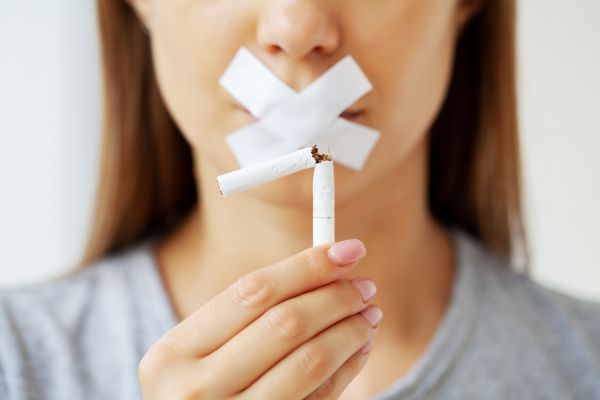
Why Willpower Isn't Enough to Quit Smoking
If you've tried to quit smoking before, you've probably blamed yourself.
"I just don't have enough willpower."
"I should be stronger than this."
"Why can other people quit when I can't?"
I've heard these words from countless clients.
And every time, I tell them the same thing.
The problem probably isn't your willpower.
In fact, if you've been relying on willpower alone, you've been trying to solve the wrong problem.
Let me explain.
Willpower Is Like a Muscle
Think about the last time you had a long, stressful day.
Maybe work was overwhelming.
The kids were demanding your attention.
You didn't sleep well the night before.
By the end of the day, how much self-control did you have left?
Probably not much.
Research suggests that our ability to make thoughtful decisions becomes more difficult when we're mentally and emotionally exhausted. Stress, fatigue, and constant decision-making can make it much harder to resist deeply ingrained habits.
That's why so many people smoke after an argument.
Or during a stressful day.
Or while driving home from work.
Not because they're weak.
Because they're depleted.
Smoking Isn't Just a Decision
If smoking were simply a decision, quitting would be easy.
You'd decide to stop.
And you'd stop.
But that's not what happens.
Smoking eventually becomes automatic.
You light a cigarette before you've even thought about it.
You reach into your pocket without realizing it.
You smoke while driving, drinking coffee, talking on the phone, or taking a break at work.
Those aren't conscious decisions anymore.
They're learned patterns.
Your Subconscious Is Doing Exactly What It Learned
One of the ways I explain this to clients is that your subconscious mind is incredibly efficient.
Its job is to automate behaviors that are repeated over and over again.
Think about driving a car.
At first, every movement required conscious attention.
Now you drive without thinking about every turn, every brake, or every lane change.
Smoking works the same way.
The more often you repeat the behavior, the less conscious effort it requires.
Eventually, the subconscious takes over.
That's why quitting can feel like you're fighting yourself.
Because in many ways, you are.
One part of you genuinely wants to stop.
Another part is simply running an old program.
Stress Doesn't Create the Habit, It Activates It
Many people tell me,
"I only smoke when I'm stressed."
I understand why it feels that way.
But stress usually isn't the cause.
Stress is the trigger.
Over time, your brain learns that cigarettes equal relief.
Not because cigarettes solve the problem.
But because every cigarette becomes associated with taking a break, breathing deeply, stepping away from the situation, and expecting to feel better.
Eventually, stress becomes the cue.
Smoking becomes the response.
Relief becomes the reward.
That's what psychologists often refer to as a habit loop.
Why Trying Harder Often Backfires
Here's something fascinating.
The harder you try not to think about cigarettes...
The more you often think about cigarettes.
Psychologists sometimes refer to this as the "ironic process" of thought suppression. When we constantly tell ourselves not to think about something, our brains often monitor for that very thought, bringing it back into awareness.
It's one reason why white-knuckling your way through cravings can feel exhausting.
Willpower isn't broken.
It's simply being asked to compete with years, sometimes decades, of subconscious learning.
The Goal Isn't More Willpower
This is where my approach is different.
I don't spend much time trying to strengthen willpower.
Instead, we focus on changing the subconscious patterns that keep smoking feeling automatic.
Through hypnosis, Neuro-Linguistic Programming (NLP), nervous system regulation, and subconscious change work, we begin teaching your brain something new.
That cigarettes are no longer necessary.
That calm can exist without nicotine.
That relief can come from within.
As those new patterns become familiar, many people find they stop fighting cigarettes.
They simply stop wanting them in the same way.
Becoming a Non-Smoker
One of the most powerful changes isn't behavioral.
It's personal.
There's a difference between saying,
"I'm trying to quit smoking."
and
Your subconscious is constantly working to keep your behaviors aligned with your identity.
When your identity begins changing, your habits often follow.
That's why I don't just help people quit smoking.
I help them become someone who simply doesn't smoke.
Ready to Stop Relying on Willpower?
Imagine what it would feel like if quitting smoking wasn't a daily battle.
Imagine waking up without immediately thinking about cigarettes.
Imagine handling stress without automatically reaching for a lighter.
That's the transformation my Become a Non-Smoker Program is designed to support.
Your personalized program includes:
A comprehensive discovery interview
A customized hypnosis session
NLP and subconscious repatterning techniques
Nervous system regulation strategies
Reinforcement resources
Follow-up support
My success guarantee for clients who fully participate in the program and follow the recommended protocol
👉 Schedule your complimentary Quit Smoking Discovery Call and let's create a personalized plan for becoming a non-smoker.
Nikki's Perspective
One of the greatest gifts I can offer someone isn't hypnosis.
It's hope.
So many smokers come into my office believing they've failed because they weren't disciplined enough.
I don't see failure.
I see a brain that learned exactly what brains are designed to do.
It created an efficient pattern.
The beautiful thing is that the same brain that learned the habit can learn a new one.
You are not weak.
You are not broken.
You are not lacking willpower.
You simply have a subconscious mind that's been practicing one pattern for a very long time.
The wonderful news is that patterns can change.
And when they do, becoming a non-smoker can feel far more natural than you ever imagined.
Disclaimer
The information provided in this article is intended for educational purposes only and should not be considered medical advice or a substitute for professional healthcare. Every individual and every health situation is unique. Always consult with your physician or another qualified healthcare professional regarding any medical condition or before making changes to your healthcare or smoking cessation plan. My goal is to share evidence-informed information while supporting your journey toward lasting health and well-being.
FAQ (People Also Ask)
Is quitting smoking really about willpower?
Willpower can help you get started, but smoking is often maintained by subconscious habits, routines, emotional associations, and environmental triggers. Addressing those deeper patterns may make lasting change easier.
Why do I keep smoking even though I want to quit?
Many smoking behaviors become automatic over time. Your conscious mind wants to quit, while your subconscious continues running familiar habits that have been reinforced for years.
Why do I always smoke when I'm stressed?
Stress often acts as a trigger rather than the root cause. Your brain may have learned to associate cigarettes with temporary relief, making smoking an automatic response during stressful moments.
Can hypnosis replace willpower?
Hypnosis isn't a replacement for your commitment to change, but it can help address the subconscious beliefs, habits, and emotional associations that make quitting feel so difficult.
What is the best way to break a smoking habit?
The most effective approach varies from person to person. Many people benefit from combining behavioral strategies, support, and evidence-based techniques that address both the physical and psychological aspects of smoking.
How does the subconscious affect smoking?
Repeated behaviors become automatic over time. The subconscious stores routines, emotional associations, and learned responses, which is one reason smoking can feel so difficult to stop through willpower alone.


