
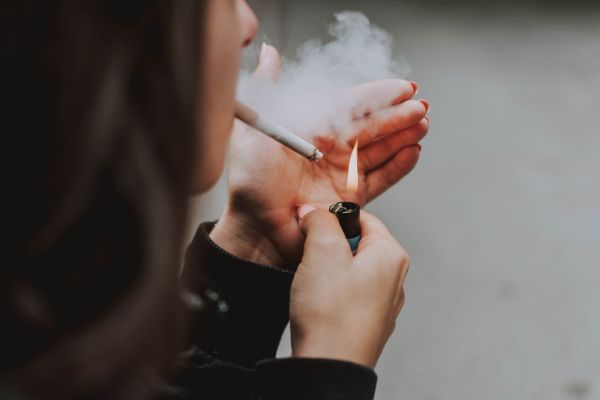
Why Quitting Smoking Isn't Just About Nicotine
For decades, we've been told that nicotine is the reason cigarettes are so difficult to quit.
And while nicotine certainly plays an important role, it's only one piece of a much bigger picture.
If you've ever wondered why nicotine patches, gum, or even vaping didn't completely eliminate your cravings, you're not imagining things.
That's because smoking isn't just a chemical dependence.
It's also a learned behavior.
A sensory experience.
An emotional coping strategy.
And for many people, part of their identity.
Understanding that changes everything.
More Than Just Nicotine
Commercial cigarettes are highly engineered products.
Manufacturers don't simply roll tobacco into paper. Modern cigarettes contain hundreds of ingredients, many of which influence flavor, smoothness, moisture, and the overall smoking experience.
Researchers have spent decades studying what keeps smokers coming back for another cigarette. Along the way, they've discovered that certain additives can make cigarettes feel smoother, more satisfying, and more reinforcing than tobacco alone.
One group of compounds that has received particular attention is called pyrazines.
What Are Pyrazines?
Pyrazines are flavor compounds that naturally produce roasted, nutty, and earthy aromas. They're found in many foods, but they've also been used in cigarette manufacturing to enhance the sensory experience of smoking.
Research suggests pyrazines may:
Create a smoother, less harsh taste
Reduce some of the natural bitterness of tobacco smoke
Make each puff feel more satisfying
Strengthen the sensory experience smokers associate with relief or pleasure
What's fascinating is that your brain doesn't separate these experiences.
It combines them.
The taste.
The smell.
The sensation in your throat.
The feeling of holding the cigarette.
The ritual of lighting it.
The expectation of relief.
After thousands of repetitions, those individual pieces become woven together into one powerful subconscious pattern.
Your brain isn't responding only to nicotine.
It's responding to an entire learned experience.
Your Brain Learns Patterns, Not Just Chemicals
One of the most remarkable things about the brain is its ability to recognize patterns.
Every time you smoke after your morning coffee...
While driving to work...
After dinner...
During a stressful moment...
Or while taking a break...
...your subconscious quietly connects those experiences together.
Eventually, those situations begin triggering cravings automatically.
Not because nicotine is suddenly missing.
Because your brain has learned that those moments belong together.
This is why quitting smoking often feels much bigger than simply giving up a chemical.
You're teaching your brain an entirely new way of responding to everyday life.
The Psychology of Smoking
Anyone who has tried to quit already knows this.
Many smokers don't just miss the nicotine.
They miss:
Holding the cigarette
Taking a deep inhale
The smell
The taste
Stepping outside
Taking a break
The familiar routine
These behaviors become deeply wired into the subconscious mind.
This helps explain why someone can wear a nicotine patch, chew nicotine gum, or vape nicotine and still crave a cigarette.
The nicotine may still be there.
The conditioned behavior is not.
Why Nicotine Replacement Doesn't Always Solve the Problem
Many people are surprised when nicotine replacement products don't completely eliminate cravings.
There's a good reason.
Those products help address nicotine withdrawal.
They don't replace:
The routine.
The emotional comfort.
The familiar rituals.
The break from stress.
The subconscious expectations your brain has been reinforcing for years.
That's why someone can still find themselves longing for a cigarette even when their body has enough nicotine.
The chemistry is different.
The conditioning remains.
Other Ingredients Found in Cigarettes
Depending on the brand, cigarettes may contain hundreds of additives intended to preserve freshness, modify flavor, or influence how the smoke feels.
Examples include:
Ammonia, which can alter nicotine absorption
Menthol, which creates a cooling sensation
Glycerol and propylene glycol, which help retain moisture
Sugars and sweetening agents that reduce smoke harshness
Flavoring compounds such as pyrazines, cinnamaldehyde, and ethyl maltol
Different manufacturers use different formulations, but the goal is often the same:
To create a cigarette that feels consistent, satisfying, and difficult to put down.
Why This Matters
If you've struggled to quit before, it doesn't automatically mean you lacked willpower.
It doesn't mean you're weak.
It doesn't mean you failed.
It may simply mean you were trying to solve only one part of a much larger equation.
Smoking is reinforced through:
Chemistry
Behavior
Emotion
Memory
Identity
Environment
Years of subconscious learning
The more of those pieces we address, the greater the opportunity for lasting change.
Why I Focus on the Subconscious
One of the reasons I love hypnosis is that it allows us to work with the part of your mind where habits are stored.
Rather than fighting cigarettes every day, we begin changing the associations that made smoking feel automatic.
Together we work to disconnect cigarettes from:
Stress
Comfort
Reward
Routine
Identity
As those old patterns weaken, many clients discover something surprising.
They don't spend every day resisting cigarettes.
They simply stop needing them in the same way.
That's a very different experience than relying on willpower alone.
Ready to Become a Non-Smoker?
If you've tried patches, gum, medication, vaping, or quitting "cold turkey" without lasting success, you're not alone.
Sometimes the missing piece isn't more willpower.
It's changing the subconscious programming that's been running quietly in the background for years.
My Become a Non-Smoker Program combines personalized hypnosis, Neuro-Linguistic Programming (NLP), subconscious repatterning, and nervous system regulation to help you create lasting freedom from cigarettes.
I also stand behind my work with a success guarantee for clients who fully participate in the program and follow the recommendations we create together.
If you're ready to leave cigarettes behind and become the healthiest version of yourself, I'd love to help.
👉 Schedule your complimentary Quit Smoking Discovery Call and let's talk about what becoming a non-smoker could look like for you.
Nikki's Perspective
One of the biggest shifts I see in my clients happens when they stop asking,
"How do I quit smoking?"
and start asking,
"Who am I becoming?"
That question changes everything.
Because cigarettes were never just about nicotine.
For many people, they became woven into daily life.
Morning routines.
Friendships.
Stress.
Celebrations.
Identity.
When we gently untangle those connections, something remarkable happens.
The habit begins losing its emotional significance.
The cravings become quieter.
The struggle becomes lighter.
And becoming a non-smoker starts feeling less like giving something up and more like coming home to yourself.
Disclaimer
The information provided in this article is intended for educational purposes only and should not be considered medical advice or a substitute for professional healthcare. Every individual and every health situation is unique. Always consult with your physician or another qualified healthcare professional regarding any medical condition or before making changes to your healthcare or smoking cessation plan. My goal is to share evidence-informed information while supporting your journey toward lasting health and well-being.
FAQ (People Also Ask)
Is nicotine the only reason cigarettes are addictive?
No. Nicotine is an important contributor to dependence, but smoking is also reinforced by learned habits, sensory cues, emotional associations, environmental triggers, and repeated subconscious conditioning.
Why do I still crave cigarettes while using nicotine patches?
Nicotine replacement products help reduce physical withdrawal, but they don't address the routines, rituals, emotions, and subconscious patterns that many smokers associate with cigarettes.
What are pyrazines in cigarettes?
Pyrazines are compounds that contribute to the flavor and aroma of cigarette smoke. Research suggests they may enhance the sensory experience of smoking and reinforce the overall habit.
Why do cigarettes become part of daily routines?
The brain naturally creates associations between repeated behaviors and everyday situations. Over time, activities like drinking coffee, driving, taking breaks, or handling stress become closely linked with smoking.
Can hypnosis help with smoking habits?
Hypnosis focuses on changing the subconscious patterns that reinforce smoking, including habits, emotional triggers, routines, and limiting beliefs that keep the behavior automatic.
Why is quitting smoking about more than willpower?
Smoking is influenced by chemistry, behavior, memory, emotion, identity, and environmental cues. Addressing multiple aspects of the habit often creates better conditions for lasting change than relying on willpower alone.


